
Inflammation
If you’ve suffered chronic pain you will know all too well how harmful inflammation can be. Inflammation causes much undue suffering to those affected by it. Inflammation causes our body’s soft tissues to swell up with blood and water, stretching them to a point where they are uncomfortable, or even break. This swelling and breakage is very painful, and might do further damage to your body, causing even more inflammation.
Most of us will experience inflammation a few times a year, maybe up to once a month. But many people are more affected by inflammation every day. Those most at risk are older people, young babies, people with immune system conditions, people undergoing chemotherapy, and people who are exposed to many bacterial and viral threats daily. These people go through a lot of pain and difficulty when they suffer inflammation, as it takes longer to recover, but also are more likely to suffer inflammation in the first place.
Often when we’re suffering from inflammation we turn to medication which reduces the swelling, alleviates the chronic pain, or does both. However, there are also ways of fighting inflammation at its roots, and whether it’s chronic pain, irritable bowel, or one of the best ways to do this is to start with diet. I will go into Inflammation and Diet in another post.
What Is Inflammation?
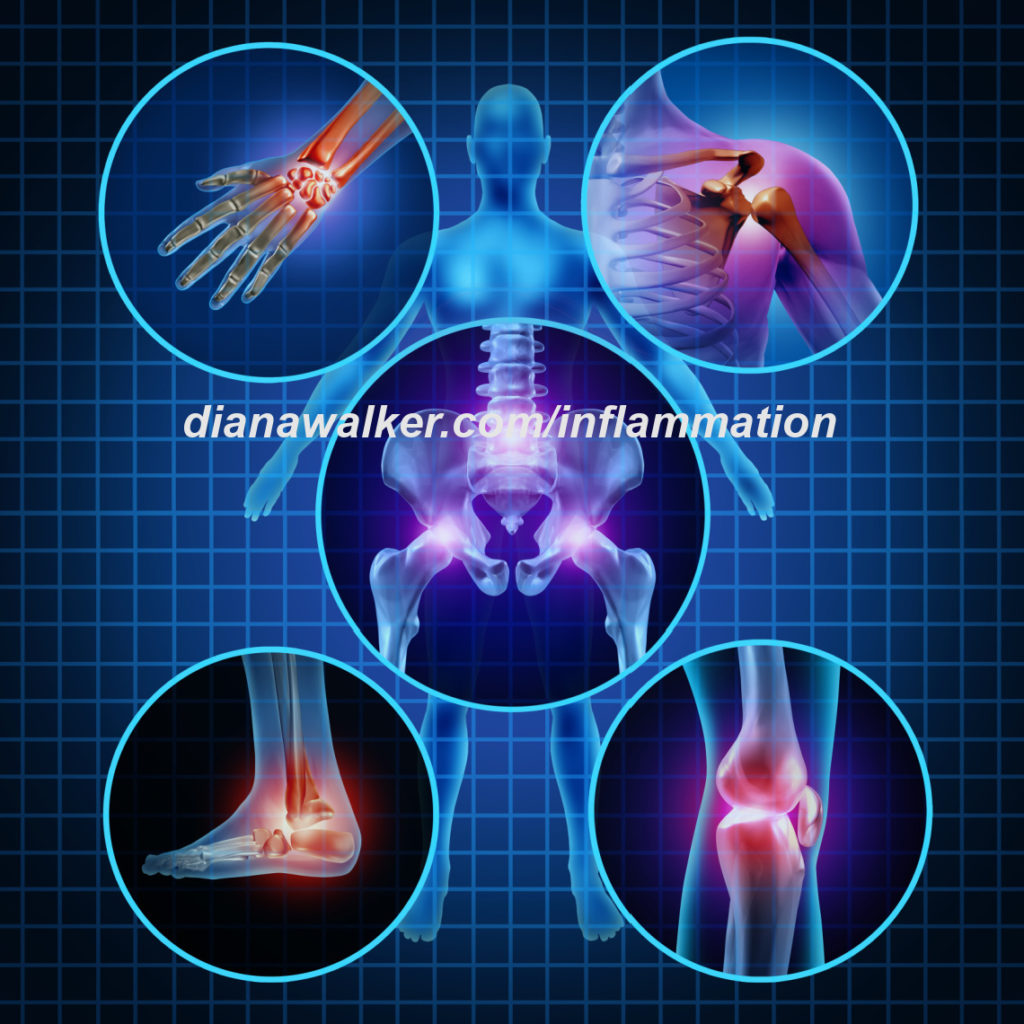
Inflammation is when any part of our body swells up with blood or water. The most common and obvious symptoms of inflammation are joint pain and stiffness, redness, skin tightness, and a swollen joint or area. But inflammation is more than skin-deep! Other symptoms of inflammation include: chills, fatigue, fever, gastrointestinal discomfort, headaches, muscle stiffness, and no appetite. Any part of your body can become inflamed and any type of inflammation can cause pain and suffering, although different body parts will react differently.
Inflammation of a wound causes redness, soreness, and may even tear the wound open repeatedly and leak clear or cloudy fluids.
Inflammation of the joints will result in redness and swelling, a slow breakdown of the soft, cushioning tissue between the bones, and a possible overgrowth of bone, eventually causing arthritis.
Inflammation in the gut will cause cramping, strong wind that doesn’t change smell no matter what you eat, and even blood in the stool.
Inflammation of the heart causes all round fluid retention, chest pains, shortness of breath and difficulty performing everyday activities.
Inflammation of the lungs causes shortness of breath and may even trigger asthma in vulnerable people.
Inflammation of the kidneys causes high blood pressure, frequent urination, migraines, and eventually results in kidney failure.
Inflammation of other soft tissues will cause pain when moving or performing basic tasks. For example, inflammation of the urethra may cause pain when urinating, or inflammation of the mouth may cause pain when eating or talking.
As you can see, inflammation can affect your entire body. And most of the time, this isn’t a bad thing!

How And Why Does Inflammation Develop?
Inflammation is a bit like the army: when it does its job, we barely notice it’s there; it works hard to keep our bodies safe; it doesn’t actually know what the big picture is, and it trusts the orders it’s given; we love it when it’s needed but get angry at it when its job is done; it gets a bad rap most of the time, but we would all be very sorry if it disappeared overnight.
Inflammation is the body’s response to a microscopic threat. Our five senses and our skin are our barriers to bigger threats, like bears, flying objects, sharp items, or cars. But the world around us is packed full of microscopic enemies: bacteria and viruses. These enemies are usually kept at bay by our skin and mucous membranes. Our skin is a water-tight barrier built of dead, dry cells, keeping all our fluids inside us and, just as importantly, keeping bacteria and viruses out of our fluids! Microscopic threats may land on our skin, but they can’t get in and attack our living tissue, which is just as good. We all know what happens when we leave a piece of raw meat out in the open a day or two. Without our skin, we would be at risk of that. But our bodies do have openings: our eyes, nose, mouth, and other orifices all need to be wide open to work. And that’s where mucous membranes come into play. Our mouths, for example, may look bare and open, but they’re actually sealed by a very fine layer of dead tissues and mucus. Mucus is a combination of protein and water that traps microscopic threats and washes them down into our stomach acid, or sends them out of our bodies, for example when we blow our noses.
These external barriers do a great job of keeping most microscopic threats off and out of our bodies. The next line of defense becomes active when the barriers fail. Naturally there are so many bacteria and viruses in the air around us, the foods we eat, the water we wash in, and every single thing we touch, that we can’t actually stop every single one from reaching our bodies. Some of these microscopic threats will even digest our skin if they stay on us long enough, defeating our barriers! So, what do our bodies do? They fight fire with fire. If our skin and mucus are barriers, our friendly bacteria are our foot soldiers.
When microscopic threats land on our skin or get into our bodies, our friendly bacteria will kill off enough of the threatening bacteria or viruses to keep us healthy and safe. But these bacteria can’t always do their job. Sometimes the threat comes in through a wound. This might be a wound from something else, like cutting our finger by accident, but it can also be a wound caused by the threat themselves: when we don’t have enough friendly bacteria to defend us, the enemy bacteria will digest our skin and mucus and this will create a wound where the microscopic threats can enter our bodies.
Our last line of defense is the one that plays a huge part in inflammation: our immune system. These are the heavy cannons, or our bombs in the war against microscopic threats. We don’t like deploying them because they are expensive, awkward, and deal a lot of damage to our own bodies. But when push comes to shove and an enemy is in our bodies, we will use our immune system to fight off the threat. Our bodies are full of cells and all these cells are very good communicators. When a part of us is injured, the living cells in the area send signals saying they are in danger. White blood cells pick up on these signals and start to gather around the damaged area. Sometimes they will even pile on top of it, completely covering the wound! White blood cells release chemicals that attack the threats. Some of these chemicals directly digest the threats, others make our bodies warm up so that the heat kills the threat, and others call reinforcements in, resulting in a lot more blood in the area. But, much like bombing, these chemicals don’t only hurt the threat. The soreness we feel is sometimes our own bodies being hurt by the attack, a sort of collateral damage. And sometimes there is a buildup of pus or clear fluid as a result of the attack. And because our bodies are basically a battle ground, all these activities will affect our nerve endings, making us feel pain.
If the threat has managed to settle in, then we might experience the more flu-like symptoms. If our white blood cells are not able to control the threat by warming up just the damaged area, they will instead warm up the whole body. This results in a fever, which will kill a lot of the threat, but which also affects us internally. Fevers use a lot of our energy, and being warm triggers an instinct to rest, so we end up feeling lethargic. Fevers also use a lot of fluids, so we may feel dehydrated, resulting in a headache, a bad temper, a dry mouth, and itchy skin. Finally, only the white blood cells near the damage know what it is they’re attacking. The rest of our body only knows it is under attack, so, a bit like a game of Chinese whispers, every part of our body acts like it has been attacked, improving our chances of recovery. This can cause nausea, vomiting, loss of appetite, stomach cramps, and diarrhea, as our digestive systems protect themselves; soreness and muscle stiffness as our muscles guard against invasion, and chills, sweating, and increased urination as our liver, kidneys, and blood try and keep clear of enemies. Our whole body goes into lockdown and purges until the threat is gone. This is why untreated infections can be such a nightmare!
INFLAMMATION PATCHES
These patches are designed to reduce inflammation and stress through phototherapy, without introducing chemicals into the body. They are clinically tested and can address inflammatory pain. The patches are easy to use and are applied topically.
Acute Inflammation
Most of the time inflammation is just a one-off event. A little cut, or a bump, or we eat something bad for us. So, we feel a bit bad for a day or two, or really bad for a week, and then we’re all better and it’s fine. But what happens when the inflammation isn’t just once, but frequent, maybe even an everyday thing, or a constant situation for your body? Well then, we are handling chronic inflammation and, as you can probably guess, having our bodies going into lockdown every day is bad news.
Understanding Chronic Inflammation
Inflammation that happens once in response to a threat and then goes away is called Acute, whereas inflammation that doesn’t go away on time is considered chronic.
There are some key differences between the two.
Acute inflammation is just reacting to a one-off threat, which it gets rid of quickly. Acute inflammation lasts no longer than a few days. Chronic inflammation doesn’t go away, lasting anywhere from months, to life. This could be because the threat is too strong for the immune system to defeat, because the threat is a virus that has taken full control of the body, because there are many dangerous foreign bodies that can’t be got rid of, or because the immune system is making a mistake and attacking normal or healthy cells (known as an auto-immune condition).
Acute inflammation calls in a wide variety of specialized cells, some lighter ones, some heavy-hitters, and wipes out the attack. Acute inflammation has three potential results. It can resolve the condition, and everything goes back to normal except for maybe a bit of scar tissue. It can kill all infected and damaged tissue, but also the infection, resulting in an abscess. The abscess may collect pus and become secondarily infected, but if treated well it may heal over. Or, finally, acute inflammation can keep on going and turn into chronic inflammation.
Chronic inflammation almost exclusively calls in the heavy-hitters of the white blood cells, and almost always after acute inflammation has failed to resolve the problem. The results of chronic inflammation are always harmful. They will destroy tissue, resulting in an abscess or ulcer which will not heal, as the new, healthy cells keep getting attacked. Chronic inflammation will also cause fibrosis and necrosis, killing healthy tissue until it begins to scar and rot inside the body, slowly stopping your organs from functioning.
Inflammation is our Friend… But…
For this reason, even though inflammation is our friend, if we suffer inflammation that lasts over a few days, we need to fight it. This is even if the causes of inflammation are different! If you have an inflamed cut that lasts three days, and an inflamed gut two days in that lasts five days, this does just as much harm to our bodies as if we had suffered eight straight days of either. This means that even if your inflammation is because of multiple small events, you still need to address it.
Inflammation Solution
I would love to invite you to visit my Interactive Presentation to see whether my Inflammation Solution works for you!




Such a thorough overview, Diana, I hadn’t realized how many different systems in the body inflammation can affect. Thanks for sharing these insights!
Thank you for a very informative post. I firmly believe in natural remedies, especially diet. I’ve had occasional joint pain in the past, but I keep it under control with natural supplements in my diet. There’s nothing better, in my opinion, than living without pain, and I feel for those who can’t. Thank you for sharing such insightful information.
Thanks for such a comprehensive view on the many ways inflammation effects all of us. Inflammation is a common scourge upon the human race, and all living beings. It is a Equal Opportunity Scourger! Yet the body speaks to us when bodily pain arises! Listen to it!!
A clear and powerful explanation—thanks for breaking it down so well! The LifeWave patches sound like a smart, gentle option for relief.
Diana, it has been too long since I looked at information about exactly what inflammation is and how it affects us. I know I experience it, so it is certainly pertinent information. Thanks for sharing it!
This was super informative. Thanks for breaking it all down in a way that’s easy to understand. I didn’t realize inflammation could show up in so many different ways throughout the body. Looking forward to your post on diet and inflammation!